
The Values on a Marquette County Property Record
Three figures anchor a Marquette County property record. Assessed value and state equalized value sit near the state's 50 percent assessment level. Taxable value follows Proposal A limits instead. A transfer uncaps it. That is why deed records matter here: a recorded deed may state consideration, and a local assessment card may list sale history under the parcel number.
| Value | What It Is | Where |
|---|---|---|
| Assessed value | Confirm the current field with the official custodian. | Confirm the current field with the official custodian. |
| Market / appraised value | Confirm the current field with the official custodian. | Confirm the current field with the official custodian. |
| Last sale price | Confirm the current field with the official custodian. | Confirm the current field with the official custodian. |
| Land vs improvement | Confirm the current field with the official custodian. | Confirm the current field with the official custodian. |
A Marquette County property record carries three value figures. Assessed value and state equalized value track the state's 50 percent assessment level. Taxable value does not. Proposal A holds its growth down until a transfer. The cap lifts at that point, which is why deed records help, since a recorded deed may list consideration and a local card may show sale history beside the parcel number.
Looking Up a Marquette County Property Value
Start with the parcel number. A Marquette County property value lookup begins with assessed value, state equalized value, and taxable value on the local card. Taxable value is the capped figure. Proposal A caps its growth until a transfer. After that, deed records may show consideration and a local card sale history, so keep the tax roll and the recorded documents distinct.
- Record the source, date, parcel number, legal description, and office response before moving to the next source.
- Record the source, date, parcel number, legal description, and office response before moving to the next source.
- Record the source, date, parcel number, legal description, and office response before moving to the next source.
- Record the source, date, parcel number, legal description, and office response before moving to the next source.
- Assessed value
- The capped figure used to compute tax after lawful adjustments.
- Market / appraised value
- The assessor’s estimate of true cash value, distinct from a sale price.
- Level of assessment
- Michigan generally uses a 50 percent assessment level for true cash value.
What a Marquette County Assessor Value Is Not
An assessor's figure is not a listing price. Assessed value and state equalized value serve the tax system at Michigan's 50 percent assessment level, and taxable value is the capped one under Proposal A. The cap lifts at a transfer. Until a transfer, the taxable figure lags the market. A recorded deed may state consideration and a local card may show sale history, but neither substitutes for dated comparable sales or a qualified appraisal.
Value vs price. An assessor value is a tax record, not a promised sale price. Use current market evidence and a licensed appraisal when value must be established.
Offline Marquette County Access
The values on a Marquette County tax roll answer tax-administration questions, not what a buyer will pay. A deed may state consideration. A municipal detail card may show sale history. Neither label means the same thing in every local unit, so compare land class, improvements, exemptions, transfer uncapping, and record date before drawing a conclusion. For market evidence, rely on dated sales and a qualified appraisal. Keep the tax bill and the recorded sale distinct.
Online records leave gaps. When a date range or a document image is missing, use the responsible counter, a phone call, a mailed request, the Michigan FOIA route, or the named archive for the rest.
The official source shown here is the starting point for this record type.
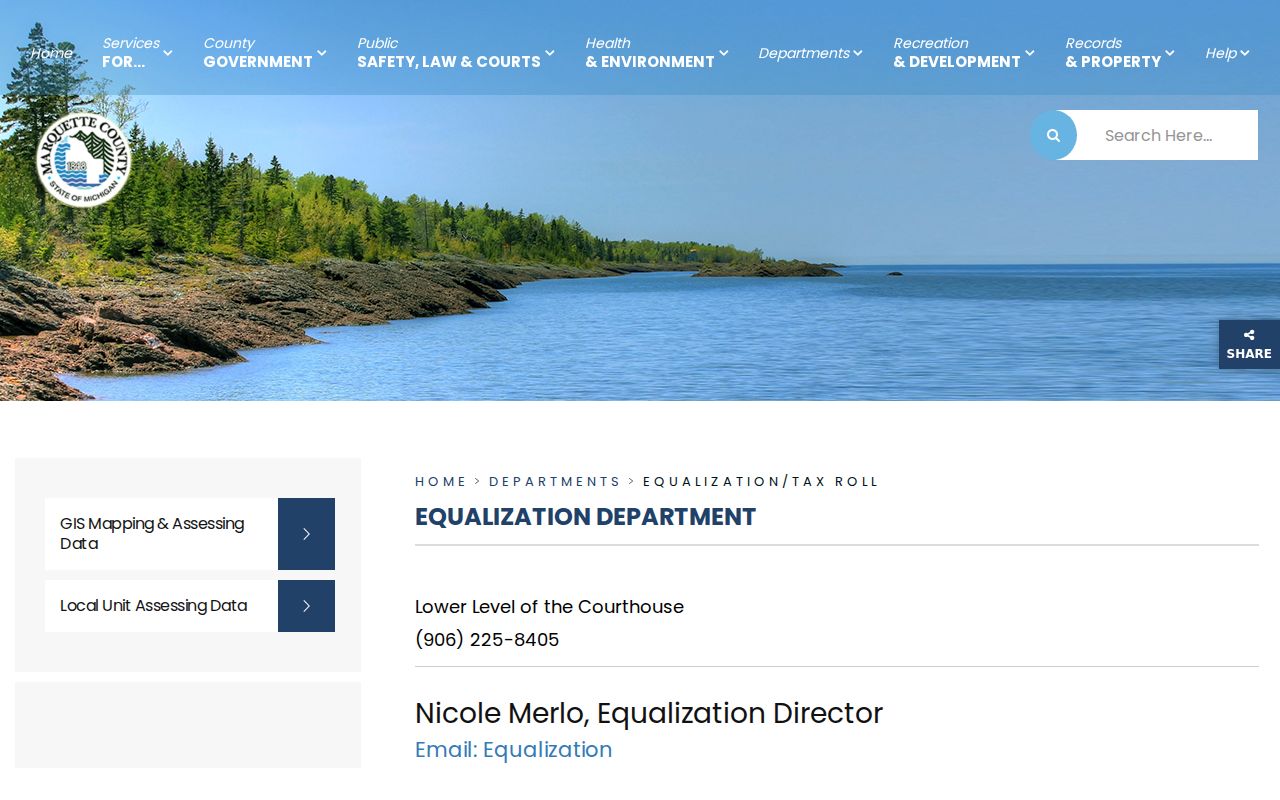
This official page shows Marquette County's public access route.
Marquette County Sale Evidence
A Marquette County deed can carry the total consideration or a statement that a real-estate valuation affidavit is on file. That recorded amount proves a transfer happened. It does not measure present market value. A municipal card may also show sale history, though the label and coverage vary across local units. So weigh deed date, parcel, party relationship, and improvements. One public parcel report shows the structure. It listed assessed value, taxable value, and SEV for tax year 2021 with no visible sale price. That makes it a lesson in record structure, not a current Marquette County valuation.
Marquette County Value Context
Marquette County parcels differ sharply in age, land use, and improvement history, from historic downtown lots and waterfront parcels to mine-era additions, rural tracts, and newer subdivisions. Planning context can explain the differences. The planning sources publish no district appreciation rate for 2024 to 2026. Skip trend claims without support. Use the dated local roll for a tax figure. Use the deed or transfer-tax record for consideration. For a market opinion, use recent comparable sales and a qualified appraisal.
Marquette County Research Check
A transfer can pull the value figures apart. Michigan's Proposal A system limits taxable-value growth before a transfer and can uncap it afterward, while assessed value and SEV stay with the assessment framework. So two neighboring parcels with similar traits can show different taxable values. Their transfer and exemption histories differ. Confirm the local unit's current record first. Planning layers explain context, not price. Ishpeming's 3,085-parcel dashboard weighs zoning, soils, wetlands, slopes, infrastructure, and flood risk, and Marquette and Negaunee planning files document distinct urban and former industrial patterns. Those sources support due diligence, not a numeric market estimate. Tax-history requests can supply up to 20 years of bills when the name and APN are known. For older years, the Treasurer points to NMU Archives. Match that history against deed dates and recorded consideration. Otherwise an assessment change can be mistaken for a sale price in a Marquette County property search.